
What’s new in the COAR community
-

COAR Notify Update
Want to learn more? Register below for one of our webinars in January 2025 for a more detailed update and discussion. Summary of work to date As of December 2024, we are half way through the COAR Notify Project. Over the last 2.5 years, we have made significant progress with over a dozen services and Read more
-

New version of the Resource Type Vocabulary now available
COAR is very pleased to announce the publication of the COAR Resource Type Controlled Vocabulary, Version 3.2. The vocabulary now contains 105 terms that represent the wide variety of scholarly resources that are being deposited, managed, and made available through repositories around the world. Each concept is accompanied by a definition and is related to Read more
-

Transforming scholarly publishing through the Publish, Review, Curate model
On October 29-30, 2024, COAR organised a strategic meeting to discuss how to accelerate the adoption of the Publish, Review, Curate model of scholarly publishing. The meeting was part of the COAR Notify Project and was hosted by the CCSD (Le Centre pour la Communication Scientifique Directe) in Lyon, France. Publish, Review, Curate (PRC) is Read more
-
In defence of repositories
by Kathleen Shearer, Executive Director, COAR In a recent blog post published on the Scholarly Kitchen and authored by Lisa Hinchliffe, there are several misleading assertions to which COAR would like to respond. The author’s argument favouring the pay-to-publish option because “green” articles are not discoverable is not based on evidence and reflects a lack Read more
Categories: Our Collective Voice
-

COAR launches task force on sustainable and interoperable PIDs models
Persistent Identifiers (PIDs) are an important part of the scholarly ecosystem. However the current global approach to PIDs excludes many developing regions and contributes to creating significant inequalities in the scholarly ecosystem. The costs of minting DOIs, for example, makes them unaffordable in most parts of Africa, Asia, and Latin America, where there are often Read more
Categories: Regional Initiatives
-

Launching the Paper Pledge for the Planet!
For Open Access Week this year, COAR and partners are launching a global effort to make climate change literature available to the world. There are over 3500 climate change articles that have been published in the last 5 years that are closed access, but can be made openly available. We are working with partners from Read more
Categories: Paper Pledge
-
COAR Notify functionality now available to DSpace users
COAR and the University of Minho Libraries are very pleased to announce that COAR Notify is now available in the DSpace platform. COAR Notify allows repositories to send and receive messages to other ‘Notify-enabled’ platforms, supporting the interlinking of related resources across the scholarly ecosystem. Now any repository using DSpace 7.6 and DSpace 8 can Read more
Categories: COAR Notify
-

CSIC, Peer Community In, and COAR advance innovative publishing model
September 17, 2024 DIGITAL CSIC, Peer Community In (PCI), and COAR are pleased to announce the launch of an innovative new service that allows researchers working at the Spanish National Research Council (CSIC) to request a review from PCI, a non-profit and non-commercial organization offering high-quality peer reviews, recommendations and publications of scientific articles. Now, Read more
Categories: COAR Notify
-
COAR Joins as Signatory of the Barcelona Declaration
COAR is pleased to announce it has become a signatory of the Barcelona Declaration on Research Information. While there are vast amounts of information being used to manage the research enterprise, this information often sits in proprietary infrastructures resulting in a lack of transparency of the data on which research assessments are based. Analysis of Read more
-
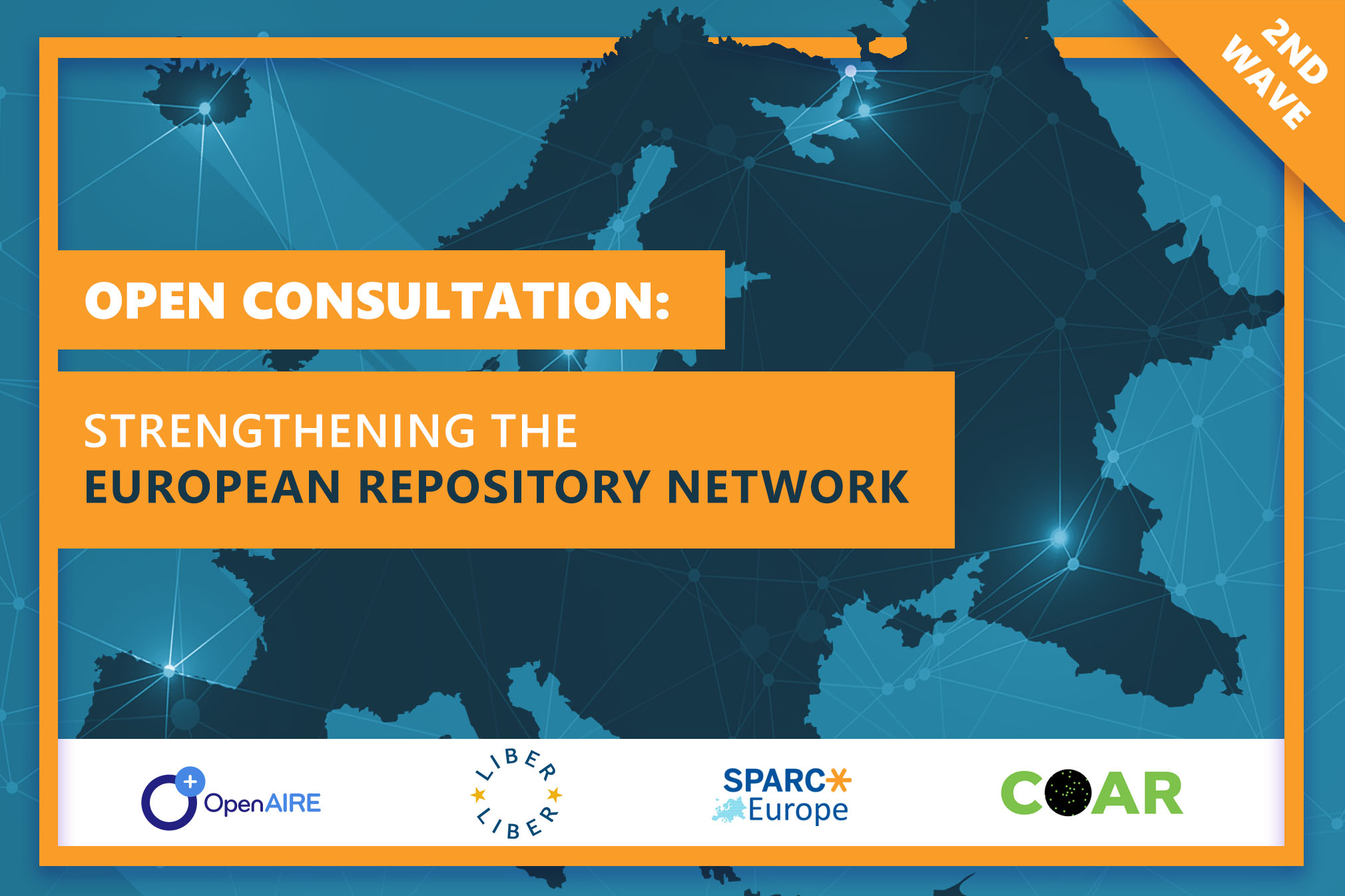
Open Consultation: Crafting a Vision for European Repositories
European repositories are critical components for open science Repositories collectively acquire, preserve, and provide open access to tens or possibly hundreds of millions of valuable research outputs. In January 2023, OpenAIRE, LIBER, SPARC Europe, and COAR unveiled a joint strategy to strengthen the European repository network. This aim is to further strengthen the open science Read more
Categories: Regional Initiatives
Categories
- AI bots
- Annual Meetings
- COAR Notify
- Good Practices for Repositories
- Governance
- Knowledge Commons
- Metadata and Vocabularies
- Multilingualism
- Next Generation Repositories
- Our Collective Voice
- Paper Pledge
- Regional Initiatives
- Repositories and Publishing
- Research Data Management
- Resources
- Training and Capacity Building
- Uncategorized